
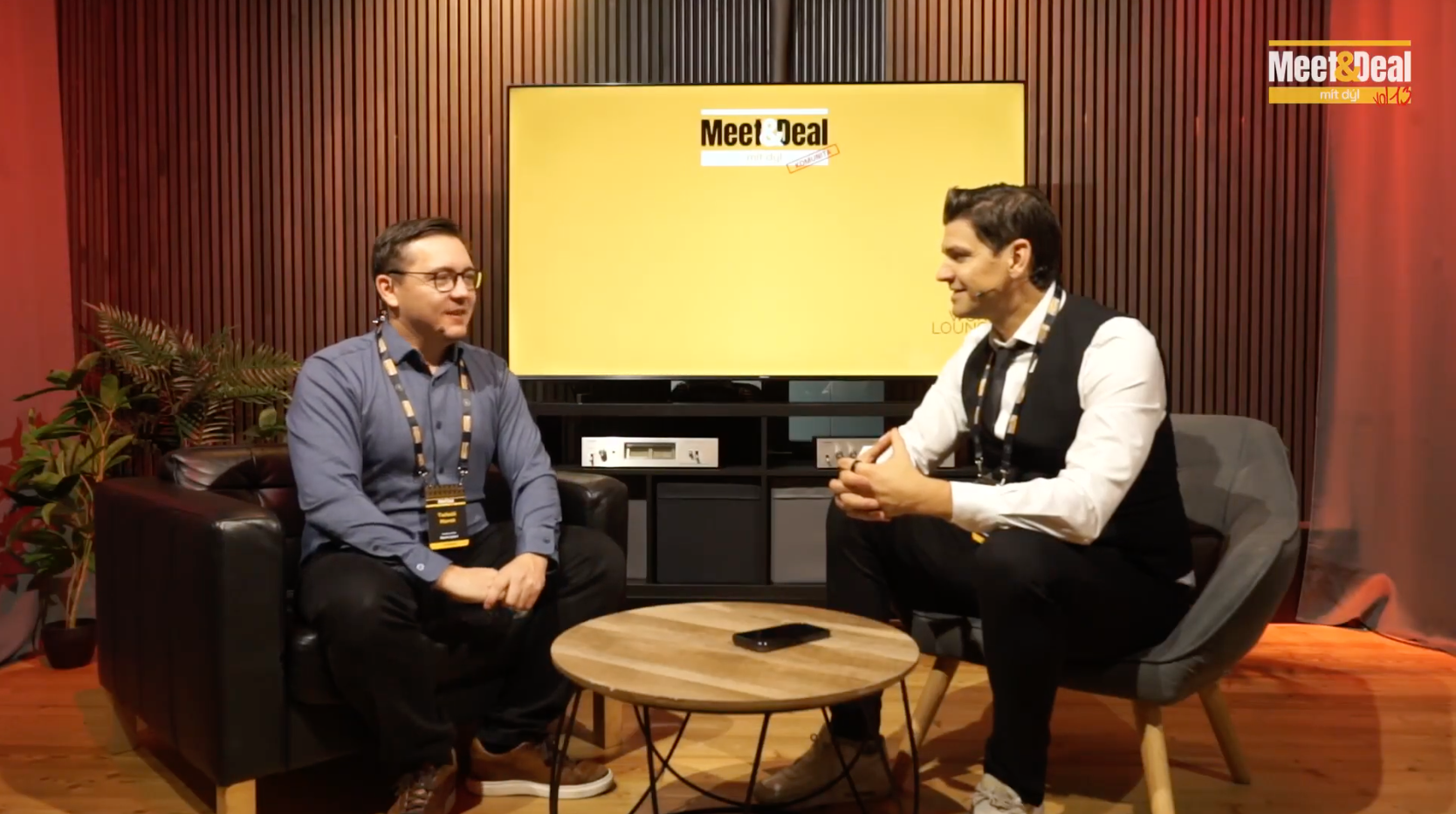
Meet&Deal as a Gateway to Clients
For Tadeáš Marek, Meet&Deal is one of his favorite networking events. "It’s an event where you can meet inspiring people," he says. "It provides a way to connect with the COMMUNITY—and with individuals who would otherwise be nearly impossible to reach if you tried going through the reception desk of their massive corporations."
He particularly values the Meet&Deal format for its speed and energy, which offer a genuine opportunity to get to know people. And it’s about more than just the initial meeting—personal contact opens doors to business relationships. "Usually, an in-person meeting gives you the chance to get to know someone, so you can follow up later via LinkedIn or another channel," Tadeáš confirms. In fact, they have already secured several clients through the Meet&Deal COMMUNITY.
What Boost.space Does
Boost.space has long focused on data, building a data management platform. According to Capterra, it is currently the third-best platform of its kind in the world. "But we didn't want data to just sit in a database; we wanted to make it actionable," Tadeáš explains.
Today, Boost.space creates AI agents that connect to the product catalogs of e-shops or brands. These AI agents identify market opportunities, enhance the catalog itself, list products on new marketplaces, improve discoverability through AI, and help drive revenue by leveraging data.
How to Reach the Global Top 3
The path to the number three spot was paved using a strategy similar to those employed by companies like Zapier or Notion. Boost.space launched a major campaign on American platforms, offering a significant discount to attract a large number of users. In exchange for a low price, these users gained access to the platform's capabilities and provided reviews in return.
"They started building a foundation—creating a sense of FOMO—and gradually, we began appearing on platforms that objectively evaluate software based on customer feedback," explains Tadeáš.
However, this path is not a quick one. It took Boost.space five years to reach this point organically. "Initially, we provided bespoke, individual services. As we noticed recurring requirements across several clients, we decided to turn that into a platform," recalls Tadeáš. The first launch went completely unnoticed. It wasn't until the third attempt that they succeeded in creating a product with genuine value for customers.
According to Tadeáš, AI now allows new companies to move much faster; while Boost.space originally wrote all its code by hand, today, AI generates the code for them.
The Startup Journey: Prioritizing Investment Over Immediate Profitability
As a startup, Boost.space’s goal is rapid growth. "Investment capital shouldn't just sit in a bank account; it should propel the company forward faster than it could through organic growth alone," explains Tadeáš. Having already completed several investment rounds, the company is now making a strong push into the American market. The numbers speak for themselves: over 7,000 customers and more than 150,000 automated workflows. ## Before and After AI
Before the advent of AI, Boost.space was a platform that synchronized company data across various systems. It prepared Excel files and datasets, which were then reviewed by humans to identify business opportunities—a task performed entirely by people.
"Today, we can integrate even larger volumes of data into a central database and let AI pinpoint the 'low-hanging fruit'—identifying the best ways for a company with an interesting product catalog to generate revenue," Tadeáš explains, describing the shift.
AI: Both Opportunity and Risk
Tadeáš views AI as an opportunity—one his company is currently leveraging—but he also harbors concerns. He cites the perspective of Elon Musk: by around 2035, AI and robots will reach a point where human labor and money are no longer as relevant. Robots and AI will generate GDP, potentially facilitating some form of universal income.
"However, there is a risk: we are entering a period where AI and robots will begin to displace human jobs. The years between 2027 and 2035 pose a significant risk—we could lose our jobs before a universal income system is in place," Tadeáš warns.
What If AI Disappeared?
When asked what he would do if AI were to cease to exist, Tadeáš responds with a touch of humor: "I believe human connection will always remain. I’m on the front lines, working directly with clients and tailoring the technology to their needs. So, I suppose I’d act as an assistant to André—focusing on networking and serving as a connector."