
How the whole thing went
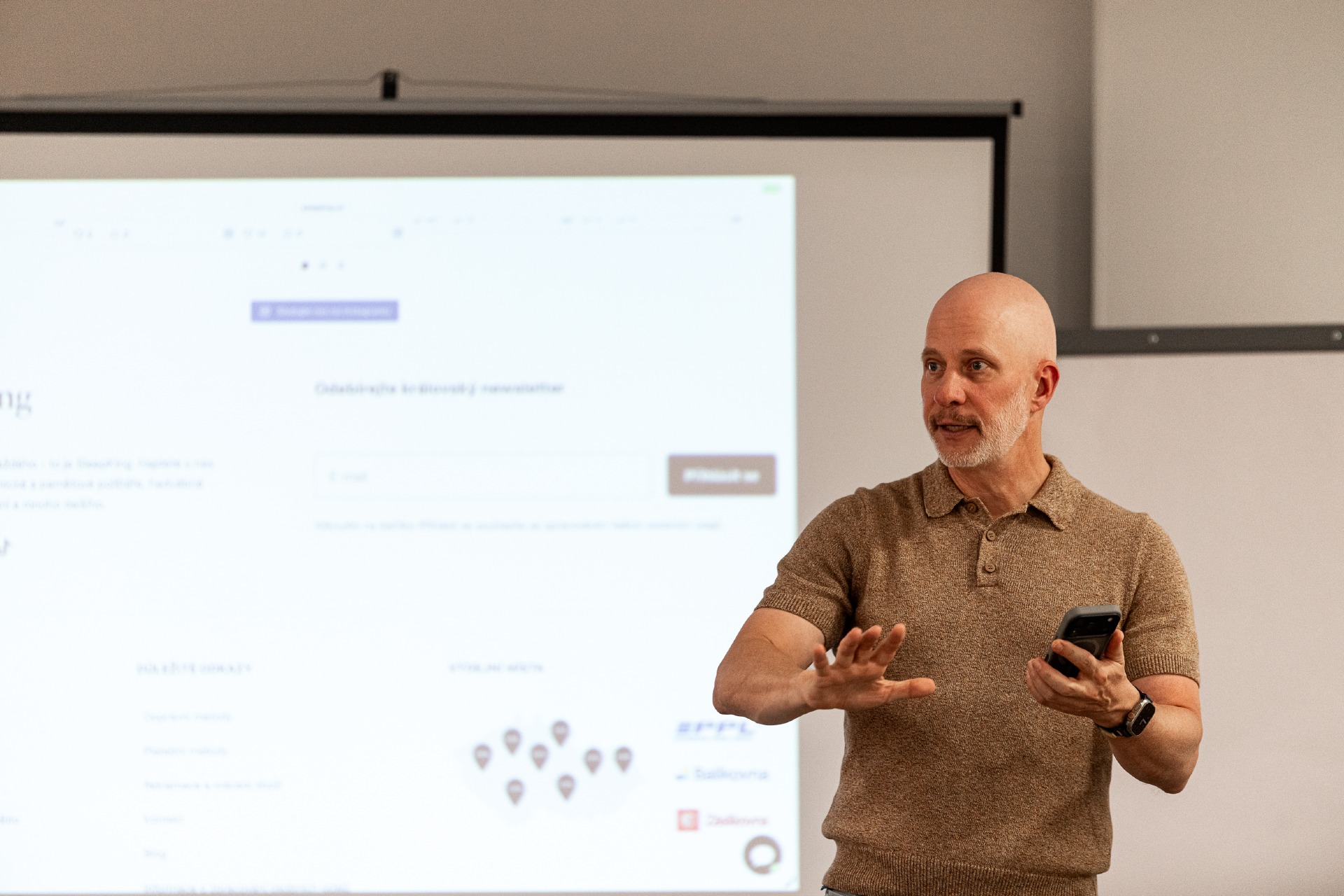
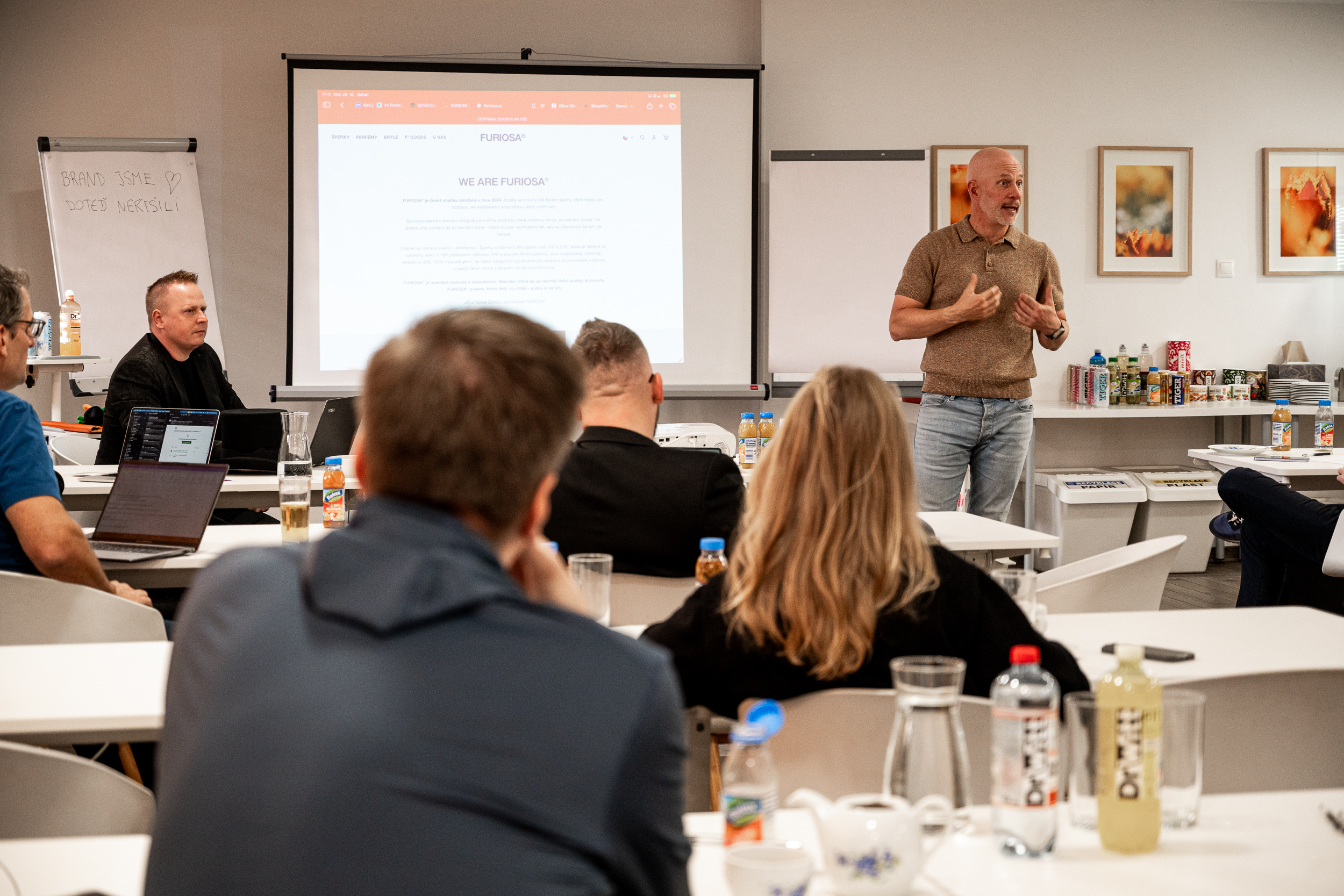
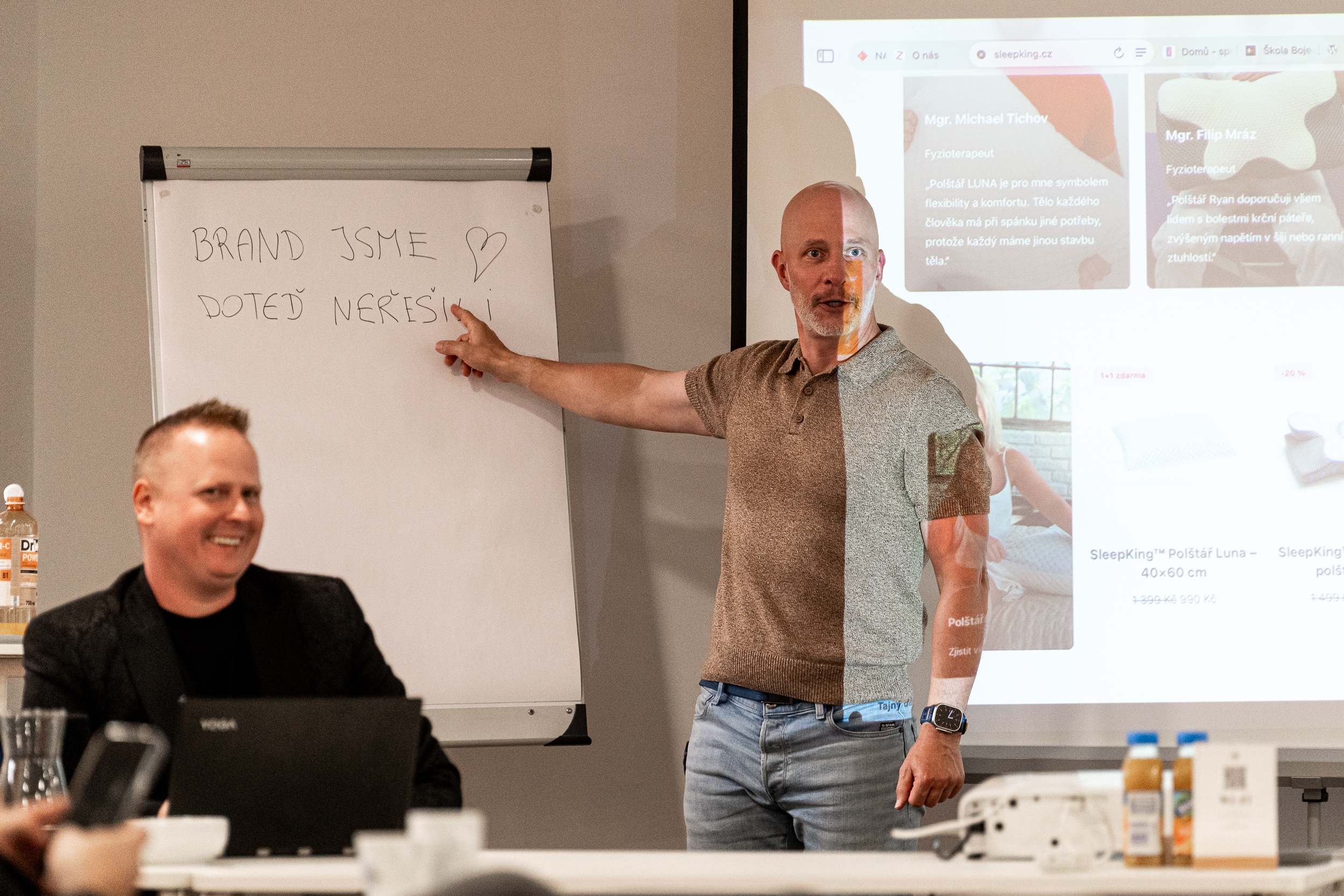
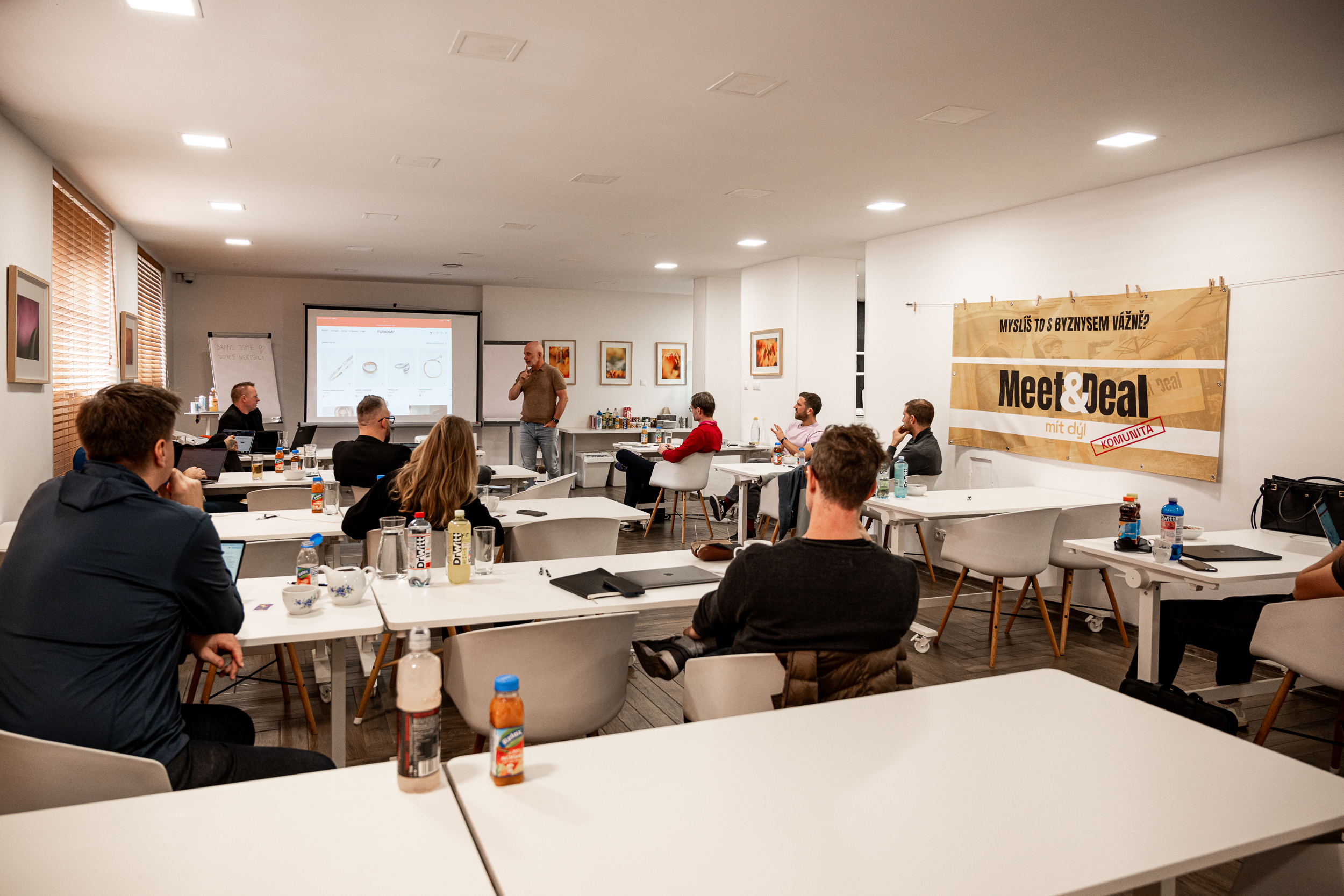
The session was led by our guarantor Jakub Kantor and the main course was handled by Karel. Every participant brought their own brand, Karel had gone through their websites in advance, and then we put them on the grill one by one. From online stores to agencies to physiotherapy and car wrapping. And because fair is fair, we let Meet&Deal get grilled as well.
Karel said right at the start that it would be unfair. Whoever is sitting on the grill is only a teaching aid. The ones who learn the most are everybody else, because they look at someone else's brand without emotion. You look at your own through all those hours of work, and that is why you cannot see the mistakes in it.
Warm up: the business card as a test
Who has a business card on them? Three people raised a hand. And how many of them have a postal code printed on it? All three.
The point was not whether business cards are useless. The point was that the way you treat a business card is the way you treat every other touchpoint. You have them because that is how it is done, but you do not know what job they are supposed to do. And when you do not know what something is for, you cannot find out whether it works.
Lesson 1: A brand has only one job
To generate future demand. Nothing more, nothing less.
And it does that in two ways. With existing customers, so they come back and buy again. With people who do not know you yet, so it sparks their interest and one day they buy from you specifically. Try looking at your brand through that single lens: what is it doing today so that you still have demand a year from now?
Lesson 2: Two seconds and an IQ of 70
Karel advises building your brand for a person with an IQ of 70. Not because customers are stupid, but because they look at you for half a second. Between meetings, in the car, while scrolling, with three other windows open.
The benchmark is simple: what does your brand do to a person within two seconds? Looking at an overview of all the participants' websites, we recognised two, maybe three brands from a distance. The rest were images and text. And on mobile it was even worse.
Fun fact: when André gave Claude the task of rewriting the intro of our website "for someone with an IQ of 70", the AI understood exactly. It proposed a clear sentence about what a person can expect, and added that a busy CEO who has three seconds for a website would appreciate it too.
Lesson 3: A carrot has a better brand than you
Karel carries a plush carrot with him. Why? Because when you say carrot, everyone immediately pictures something. The colour, the taste, the shape. Incidentally, it was the Dutch who branded it orange back in the 17th century.
With most company brands, nothing comes to mind. The customer has to decipher what you do. And a brand that makes the customer's life complicated is not doing its job.
Lesson 4: Attributes vs. benefits
A really simple tool that came up with almost every brand. Take a sheet of paper and split it into two halves:
- Attributes: what your product has. Durability, material, technology, price.
- Benefits: what the customer gets out of it. Peace of mind, time saved, a feeling, status.
Companies are usually proud of their attributes, because they put a lot of work into them. But the customer lives in a two second world and buys benefits. Some brands are strong on attributes (electric cars, for example, which all start with range), others on benefits. Decide where you stand.
Lesson 5: Brand codes, not originality
This is where the brands that get seen part ways with the brands that do not. Brand codes are a set of three to five recognisable elements: a colour, a shape, a face, a sound, a signature motif. Those are what you take into battle everywhere you have very little room. An icon on a phone, half a second on a billboard, two seconds on the radio.
Karel summed it up by saying that we are not looking for originality, we are looking for consistency. Originality essentially does not exist. If a car wrapping company uses hexagons on its website, it can happily turn them into its code. It does not matter that somebody else has them too, it is enough that nobody in their field does.
And watch out for dark websites. Somewhere around the millennium people started thinking that whatever is dark is luxurious. Except that what cannot be seen does not trigger any emotion.
Lesson 6: Hold the line for years, not weeks
Once you roll something out, you should be able to keep doing it the same way for years. By various estimates the brain needs to see a brand roughly seven times before it even starts noticing it. When you communicate differently every time, you keep starting from zero.
Big brands cannot afford that, which is why they have manuals and check every piece of communication for how many brand codes are in it. Smaller companies tend to be bigger daredevils and come up with something new every time. Creativity is great, but not at the expense of clarity.
Lesson 7: B2C first, H2H always
When you are torn between communicating to companies or to end customers, Karel says go B2C. The emotion you send to people is at the same time a message to your partner: this is how you will feel when you do business with us.
And even in B2B there is a human being on the other side. Not a rubber stamp, but somebody who would also like to have a nice day. Karel calls it H2H, human to human. B2B brands often put on a cold, corporate face as a precaution, and in doing so they rob themselves of attention.
Lesson 8: The day after
A favourite exercise: imagine somebody met you today. What do you want them to tell a friend about you in the kitchen tomorrow?
Once you answer that, you find out you have to simplify everything. People need to be able to tell a story about you. When you do not give them the words, they will make up their own. And those may not be the right ones.
Lesson 9: The About us page is sales space
Almost nobody visits the About us page, so companies use it to write an essay about how it all began. Karel flips it around: what would you have to write there to make it worth sending paid ads to?
Nobody cares what you were drinking when the first idea came to you. They care why they should buy from you specifically. History, tradition and craft are great, but only when the customer can read their own benefit out of them within two seconds. The rest can go in the blog.
And one more of Karel's rules that we are hanging on the wall: do not raise a question you do not have an answer to. A big "Why are we here?" on a website without a proper answer does nobody any good.
They grilled us too
And now for the best part. Karel told us straight away that our slogan about "the most nourishing networking" reads to a new person more like a motto on a door that they do not understand. It is our language and our emotion, but not theirs. We communicate attributes (what we do) instead of showing what it is good for.
His suggestion, though, got us excited. We are not selling events, we are selling transformed evenings. We are not selling networking, we are selling new friends, contacts and deals. And the goal? For everyone who wanders in to be annoyed that we did not invite them last time.
Our community page, on the other hand, works according to Karel: people, smiles, a light background, guarantors. It is inviting, and that is exactly what the whole brand should be. So we are getting to work, and we already have the new homepage sketched out in our heads.
Homework for you
You did not have to be there to get something out of it. Here are five things you can do this week:
- The two second test: open your website on a phone, zoom out and ask a friend what it is you do.
- Attributes vs. benefits: write out both halves and find out what you are really communicating.
- Brand codes: pick three to five elements people should recognise you by, and make sure they are everywhere.
- Competitor scan: put 10 to 15 alternatives in a table along with their slogans, promises and assets. With AI you have it done in an afternoon.
- Record yourself: if you can sell your company in 20 minutes but not in 5 seconds, record the whole pitch and let AI or a copywriter pull out the short version.
Want to be there next time?
We run sessions like this regularly as part of the Meet&Deal KOMUNITA. A small group, a guarantor who knows what they are talking about, and no empty talk. You will find more at meetdeal.cz/en/community.
And if you want a taste of how things work with us first, come to Meet&Deal vol13 on November 5 at WorkLounge Karlín. Bring a business card. Or maybe better not.
Thanks to Karel for the grilling, to Jakub for leading the session, and to everyone who put their brand on the spit.