
A Company’s "Brain" Is No Metaphor—It’s a Database of Decisions
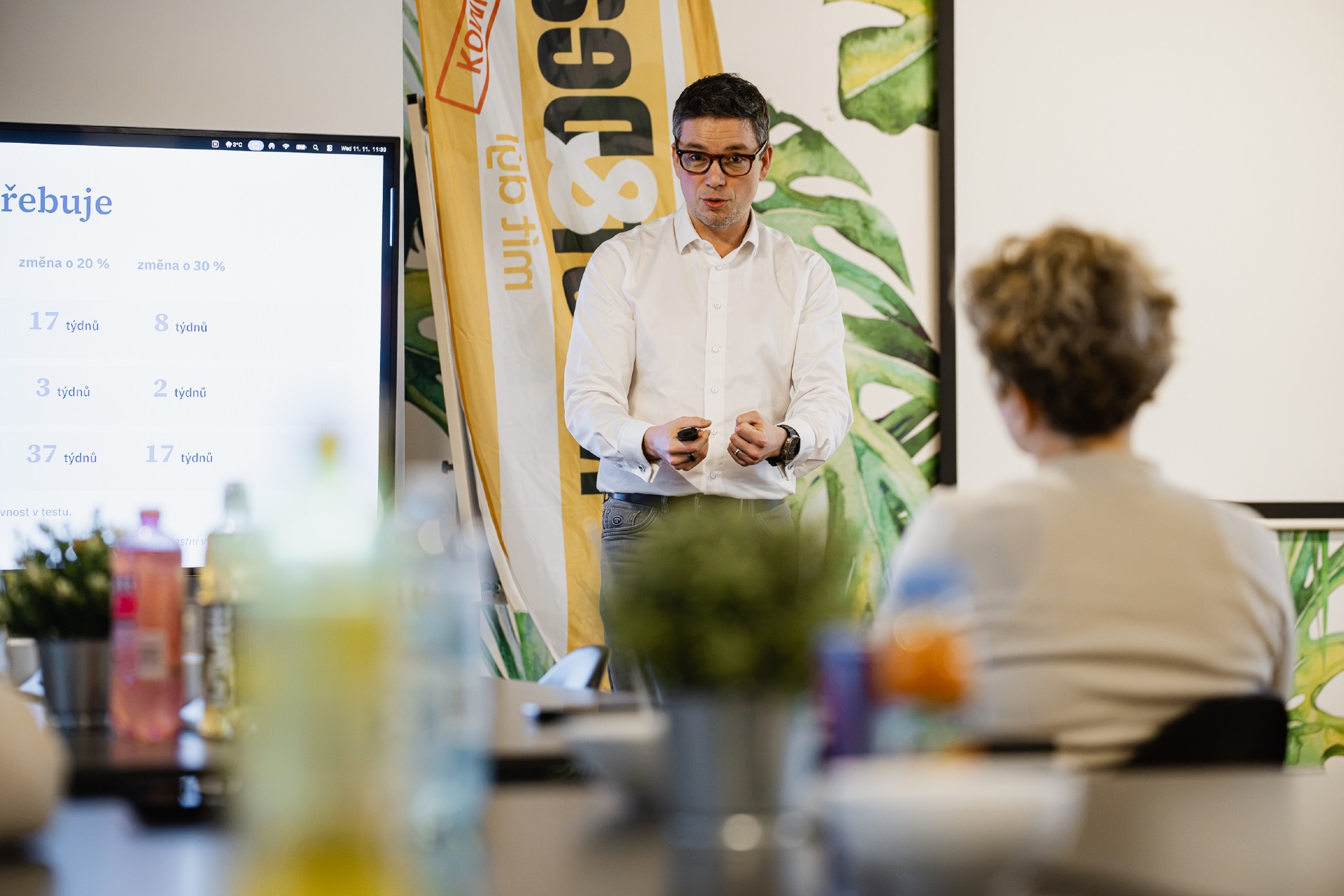
André has unveiled a structure he calls the company’s "brain." It serves as an index of every decision ever made within the organization—decisions backed by someone with enough conviction that they continue to guide current operations. It currently contains 137 decisions and 39 processes that underpin the entire workflow, ranging from community sessions and "vibecoding" meetups to large-scale events.
Every entry follows a consistent format: what it is, what it relates to, its assigned tags, and where it fits into the broader structure. This allows for cross-project searching within the system, preventing information from remaining scattered across people’s minds or buried in email threads.
A key metric: the company’s current dependency on André stands at 61 percent. Out of roughly 200 steps across 39 processes, the majority still rely on human intervention. The goal is to reach 90% or higher in key areas. For the NetworkingAkce.cz project, automation is already nearly 100%.
A company that is 61 percent dependent on a single individual isn’t really a company—it’s a project.
Feeding the Brain: Inputs and Access
André outlined the sources that feed data into the system:
- Meeting recordings via Plaud
- Chat interactions with Claude, integrated with Asana
- Terminal-based work via Claude Code
Recordings are processed either immediately or automatically during a daily "nightly cleanup" at 7:00 AM, which extracts key facts, completed tasks, and definitive decisions.
The entire team, along with eight AI agents, has access to this "brain." However, this doesn’t mean it sees absolutely everything. Within the system, André distinguishes between what is team-related and what isn’t, as the "brain" also contains sensitive corporate information—such as details regarding personnel or financial figures. He offered a specific example of the risks involved: if someone within Asana were to ask the agent about a particular employee’s salary, the agent would provide an answer—unless the proper filters were in place.
Technically, the entire "brain" is stored on GitHub as a private repository; this makes version control and sharing much easier than using a dedicated server.
The Control Center: A Dashboard That Reveals Uncomfortable Truths
The second layer of the system is the "control center"—a dashboard that serves as André’s primary workspace, eliminating the need to look elsewhere. It displays the status of Asana, revenue figures, the state of various partnerships, and the registration status for upcoming events.
André admits that the system is still in its early stages, and the data displayed can sometimes be grim—for instance, 62 overdue tasks.
He openly stated that he wouldn’t implement this level of transparency and automation in larger organizations, as it would likely cause them to fall apart. For a small team like Meet&Deal—where there are currently more AI agents than human staff—it makes perfect sense.
A dashboard is only truly useful if you monitor it regularly, rather than just opening it once a month.

Eight Agents, Eight Distinct Roles
The team of agents André described has clearly defined responsibilities. Rather than a single, all-purpose assistant, there are specialized agents, each with a specific scope of work:
Alfred: A personal assistant with access to email and calendar; in the future, he is intended to respond independently on André’s behalf.
Dan 2.0: An AI copywriter equipped with three different "tone of voice" guidelines. You simply provide the target audience and the platform, and he generates a finished post in the appropriate tone.
Forge: An agent dedicated to coding.
Hermes: An email agent integrated with Ecomail. Thanks to him, André rarely needs to log into Ecomail or draft emails himself.
Oracle: An orchestrator that manages task delegation among the other agents, ensuring they don’t get stuck in an infinite loop.
Scribe: Retrieves recordings from Plaud and transcribes them.
Sentinel: Monitors security, system operations, and website uptime.
Studio: A marketing tool that generates graphics based on established rules, eliminating the need to hire graphic designers.
These agents aren't used solely by André; the entire team relies on them to manage and oversee specific inputs flowing into the company.
Oracle: The Guardian That Keeps Agents from Going Rogue
André admitted that when he first began building these agents, he was warned that they shouldn't communicate directly with one another, as they could get caught in an infinite loop. He confirmed that this actually happened to him. The solution was an additional agent named Oracle—an orchestrator through which all communication between the other agents flows. The paradox is that Oracle is just another agent itself, delegating tasks just like the rest. André admits he doesn’t know exactly why this works better—since he isn’t a programmer—but he suspects it’s due to stricter, more robustly defined rules. In practice, it works like this: when André assigns Hermes the task of drafting an email for a community session, Hermes requests the text from Oracle; Oracle then calls upon Dan 2.0, and the completed text travels back along the same path. Whether you are assigning a task to an agent or a human, the process is virtually identical.
Deal News: Content created in a few hours that runs on autopilot
A prime example is the "Deal News" project—the content marketing component of Meet&Deal. According to André, it was built entirely through "vibecoding" in just a few hours of work about six months ago. The goal was to move away from "buy a ticket" style content and replace it with material that offers genuine value. The application monitors 26 media outlets, checking for new stories every 30 minutes and posting them to Slack. Within Slack, André has a button to generate graphics—adhering to specific brand and tone-of-voice guidelines—along with a post caption. He also has three buttons for publishing directly to LinkedIn, Instagram, and Threads, with the format automatically tailored for each platform.

Checklist: How to Start Building Your Company’s "Brain"
Based on the session, here is how you can get started:
- Document decisions, not just tasks
Record every decision that affects how work gets done in the company using a consistent format: what it is, the rationale behind it, who is responsible, and what it relates to.
- Create a central source of truth
Establish a single location for all rules, processes, and decisions. Whether you use Git, Notion, or Obsidian—the specific tool matters less than ensuring the data is easily accessible.
- Quantify your dependency (as a percentage)
Review all company processes and identify which steps are performed exclusively by the founder. The resulting figure will reveal where you are acting as a bottleneck.
- Start with one agent for one specific function
Instead of building a general-purpose assistant, create your first agent with a clearly defined role—such as copywriting, media monitoring, or processing recordings.
- Set boundaries for data access
Categorize information into "team-accessible" and "sensitive." An agent might have access to operational processes, but not to salary data or strategic metrics.
- Introduce an orchestrator once you have multiple agents
When agents begin communicating with one another, there is a risk of getting stuck in a loop. A central intermediary prevents this.
- Keep a human in the loop for the final action
Even with high levels of automation, it is wise to retain a human-led final approval step as a safeguard. ## Key Takeaways
Decisions belong in the system, not in your head. If a decision has a rationale behind it, it’s worth documenting it and linking it to the relevant context.
Automation should have a clear, percentage-based goal. Instead of a vague "we want to be more AI-driven," you can set a specific target figure.
Humans should remain at the input and output stages. Even with high levels of automation, it makes sense to keep a human in the loop for the final send-off or publication—acting as a crucial checkpoint.
Data security is managed through configuration, not by avoiding AI. By distinguishing between general team information and sensitive data, you can deploy AI agents without the risk of leaking confidential material.
Specialized roles for agents work better than a single, all-purpose assistant. Eight agents with eight clearly defined tasks are easier to manage and more reliable.
Pilot first, scale later. The level of automation André demonstrated for a small business might not be the right fit for a larger team. It’s important to find your own pace.
Want to see it in action?
The Meet&Deal COMMUNITY is an exclusive group of entrepreneurs, business owners, marketers, and specialists. Here, topics aren't discussed in the abstract; instead, we look directly at the actual systems built and operated by the members themselves. André personally leads the "Vibecoding" sessions—a space where solutions are built live on a laptop, rather than just described on a slide.
If you’re looking for ways to move more processes out of your head and keep them running even when you’re not involved, this is the place for you.